
Our Technologies
Genetic Diversity Analysis & Optimization
Our service enhances genetic diversity and optimizes selection to drive innovation in breeding programs.
- Genetic variation is the essential ingredient for genetic progress in breeding.
- For most crops, a significant amount of genetic variation was lost during domestication and also through modern breeding practices.
- To stay competitive and achieve rapid gains in breeding requires a steady influx of new and useful genetic variation.
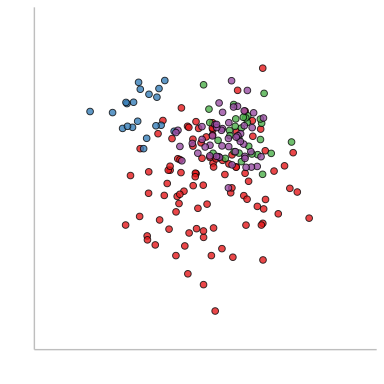
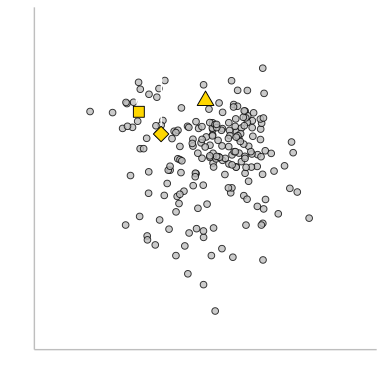
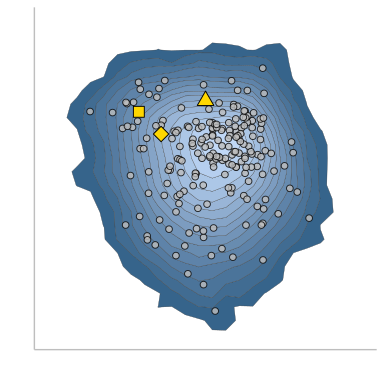
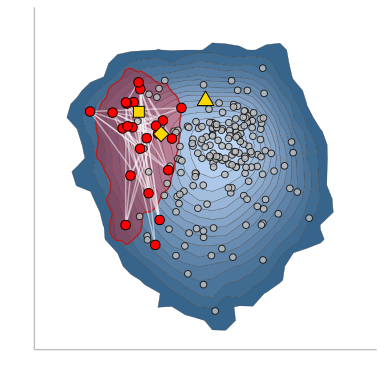
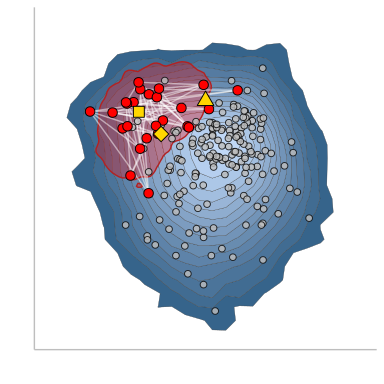
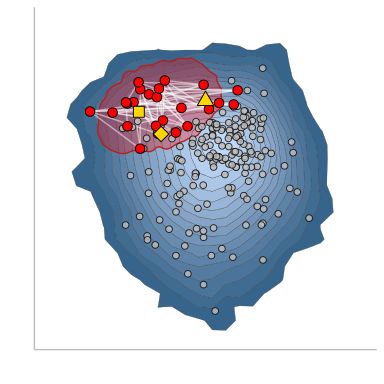
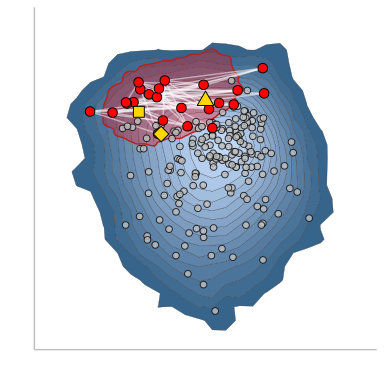
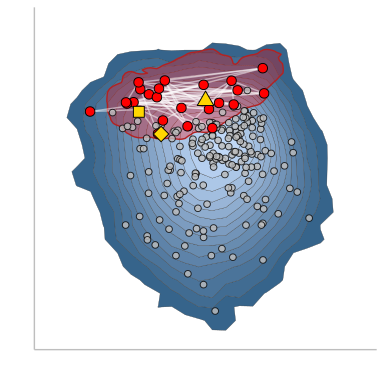
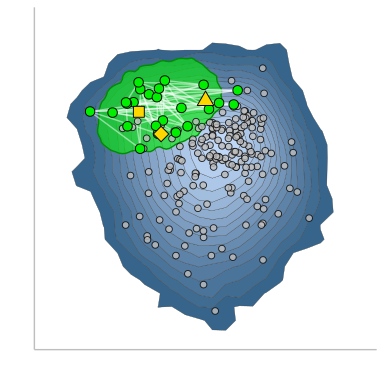
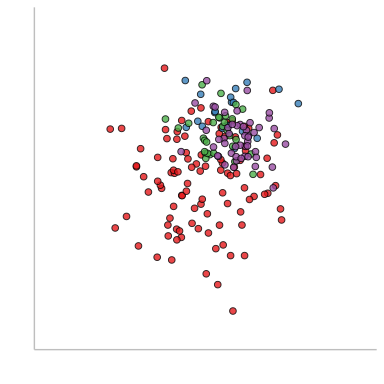
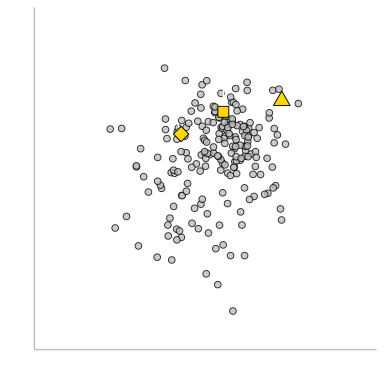
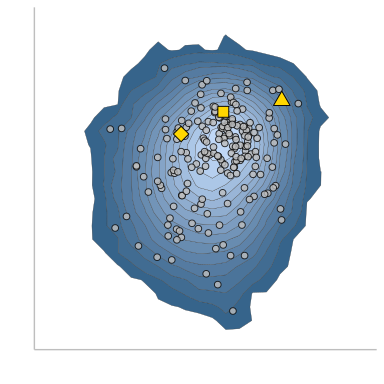
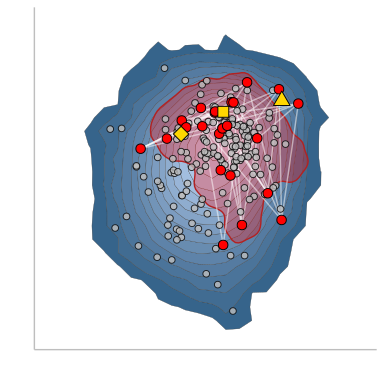
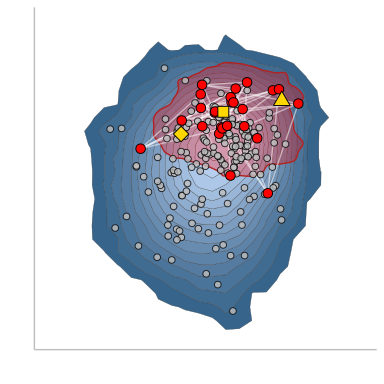
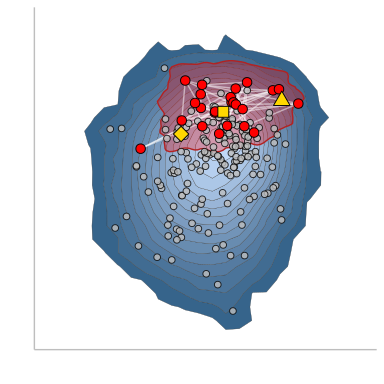
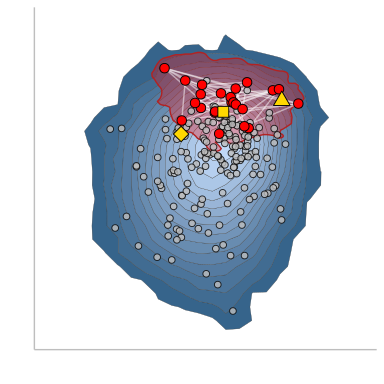
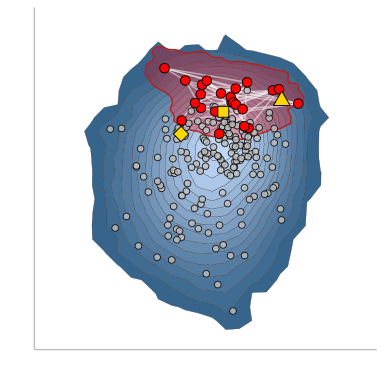
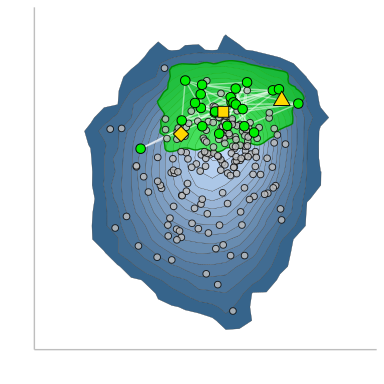
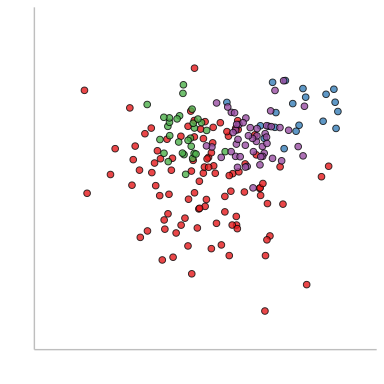
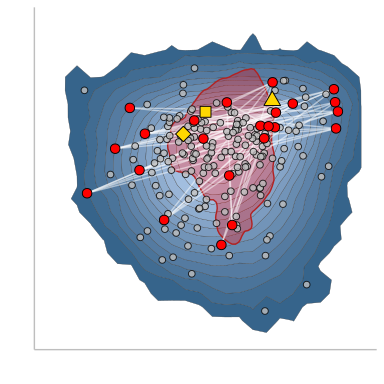
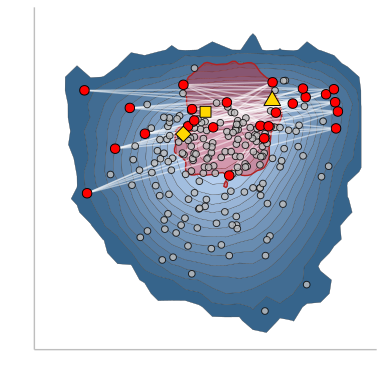
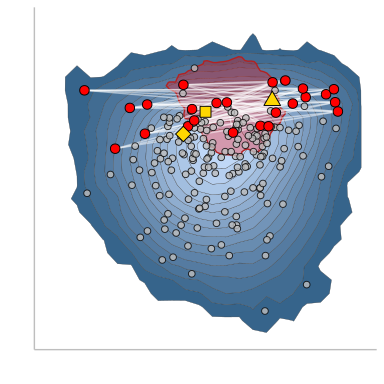
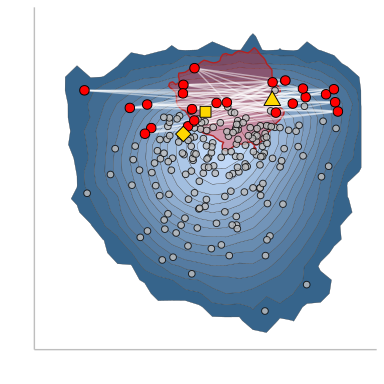
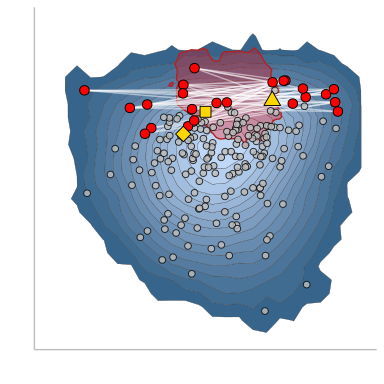
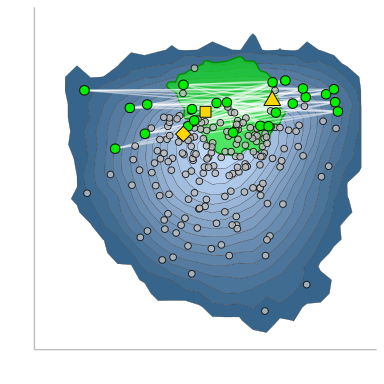
- NSIP’s Core Set Optimization technology maximizes diversity and performance in the smallest possible set of material, so that genetic diversity is accessible to breeders.
Genetic Gain Key Performance Indicators
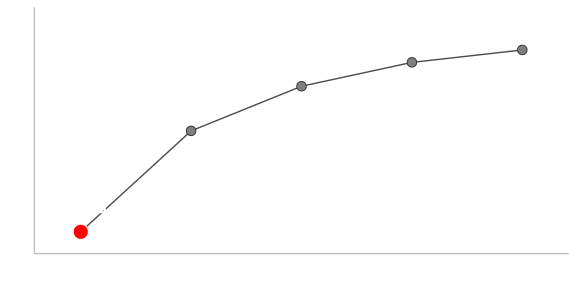
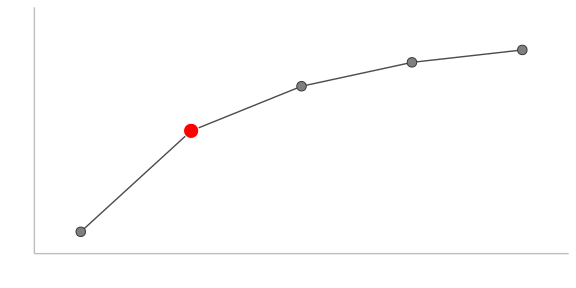
NSIP monitors observed performance in programs at multiple stages. By tracking performance across years, NSIP can report the impact of the application of its technologies as well as program progress.
- In early-stage trials NSIP measures the proportion of on-target material per year.
- In intermediate-stage trials NSIP measures the accuracy of advancements between stages.
- In late stage trial NSIP measures the observed multi-trait performance of commercial material against commercial benchmarks.
Bioinformatics
NSIP works with both array and sequence data for routine and predictive breeding applications. NSIP's approach includes a suite of techniques designed to optimize the performance of genotype data for downstream use.
- NSIP applies error rate analysis to identify off-target samples and markers.
- Genotype imputation optimization is used to acount for missing data with high accuracy across a range of population structures.
- In the absence of a genetic map, map construction optimizations are run to determine marker inter-dependencies.
Global Environment & GxE Studies
NSIP designs Genotype by Environment (GxE) Studies with clients that facilitate decision making, resource allocation, and inform new product development
- Interpret historical breeding performance data in the context of multiple environments.
- Identify existing varieties that perform well in new target environments.
- Provide sufficient data to develop crosses aimed at new and existing target environments.
Optimized Genomic Selection
NSIP’s OGS is a proprietary version of genomic selection that uses optimized forward prediction to accelerate breeding
- Uses proprietary optimization algorithms developed for each step in the genomic selection process and tailored to each species.
- Permits prediction and improvement of multiple traits simultaneously.
- Can predict gains multiple generations into the future, allowing resources to be focused on the most promising subset of selection scenarios.
Genetic Purity & Parentage Analysis
NSIP’s purity and parentage testing methodology rapidly identifies errors in seed handling, crossing, or pedigree tracking
- Classify accidental selfs in crossing populations.
- Detect accidental outcrosses in selfing populations.
- Identify exogenous individuals that are not members of the population.
Hybrid Prediction
NSIP’s Hybrid Prediction technology combines training set optimization with marker-based prediction to accelerate breeding program results
- Predict general and specific combining ability.
- Maximize additive and non-additive components of hybrid yield.
- Predict and efficiently improve of multiple traits simultaneously.
Optimized Breeding Starts
NSIP’s OBS selection technology can be applied either to maximize novel diversity, to produce an end-product superior to existing alternatives, or a balance of both approaches
- General purpose approach for predicting new starts based on an optimized training set from historical program data.
- Optimizes selection pressure for diversity, product profile traits, and background traits.
- Incorporates forward prediction to capture multi-trait depenedencies in the progeny generation.
Project Management
NSIP has a team of experienced scientific project managers that work directly with our partners to achieve maximum efficiency in the execution of projects.
- A dedicated project manager is assigned to each client, ensuring seamless communication between the NSIP and client teams.
- NSIP’s project managers direct and oversee the execution of breeding projects, leveraging the full suite of NSIP’s technologies to address client goals.
- Project managers track milestones and coordinate reporting to ensure project progress and success.
Breeding Scheme Optimization
Many factors determine the cost and probability of success of breeding schemes. NSIP uses our clients’ existing data to identify optimal breeding schemes that minimize cost and maximize genetic gains.
- NSIP uses data-driven simulation and modeling to identify inefficiencies in breeding schemes.
- The optimization considers multiple constraints: crop biology, logistics, germplasm, and target markets.
- Examples of breeding scheme parameters that NSIP has optimized: crossing block design, progeny count and allocation, inbreeding strategies for line development, designs for trait introgression.
Trial Design & Data Collection Optimization
NSIP’s technologies assess the efficiency of current trialing procedures and identify optimized strategies that will lead to accurate breeding decisions with less time and expense.
- NSIP uses existing breeding data to develop simulations and models that test the accuracy and efficiency of trial design and data collection strategies.
- Which strategies are effective in maximizing the accuracy and efficiency of selection?
- Examples of trial design parameters that NSIP has optimized: plot size, field design (blocking, replication, randomization), timing of data collection, yield prediction from other traits, when to collect genotype data, etc.
Germplasm Enhancements & Trait Discovery
NSIP’s approach to germplasm enhancements addresses the introgression of desirable genetic variation from exotic germplasm while purging unfavorable variation, making diversity accessible to breeders that focus on product development.
- Optimized Discover Populations (ODPs) efficiently integrate novel genetic diversity by starting with a “wide-cross” to un-adapted material and developing an adapted population that serves as an optimized training set for endpoint breeding.
- Optimized Discover Populations are novel sources of favorable variation that can be rapidly integrated in product development breeding pipelines.
- NSIP also optimizes traditional trait introgression via recurrent backcrossing, identifying optimal crossing and genotyping strategies to efficiently recover maximally isogenic lines with the trait(s) of interest.